Largemouth Bass
Micropterus salmoides
- How to Identify
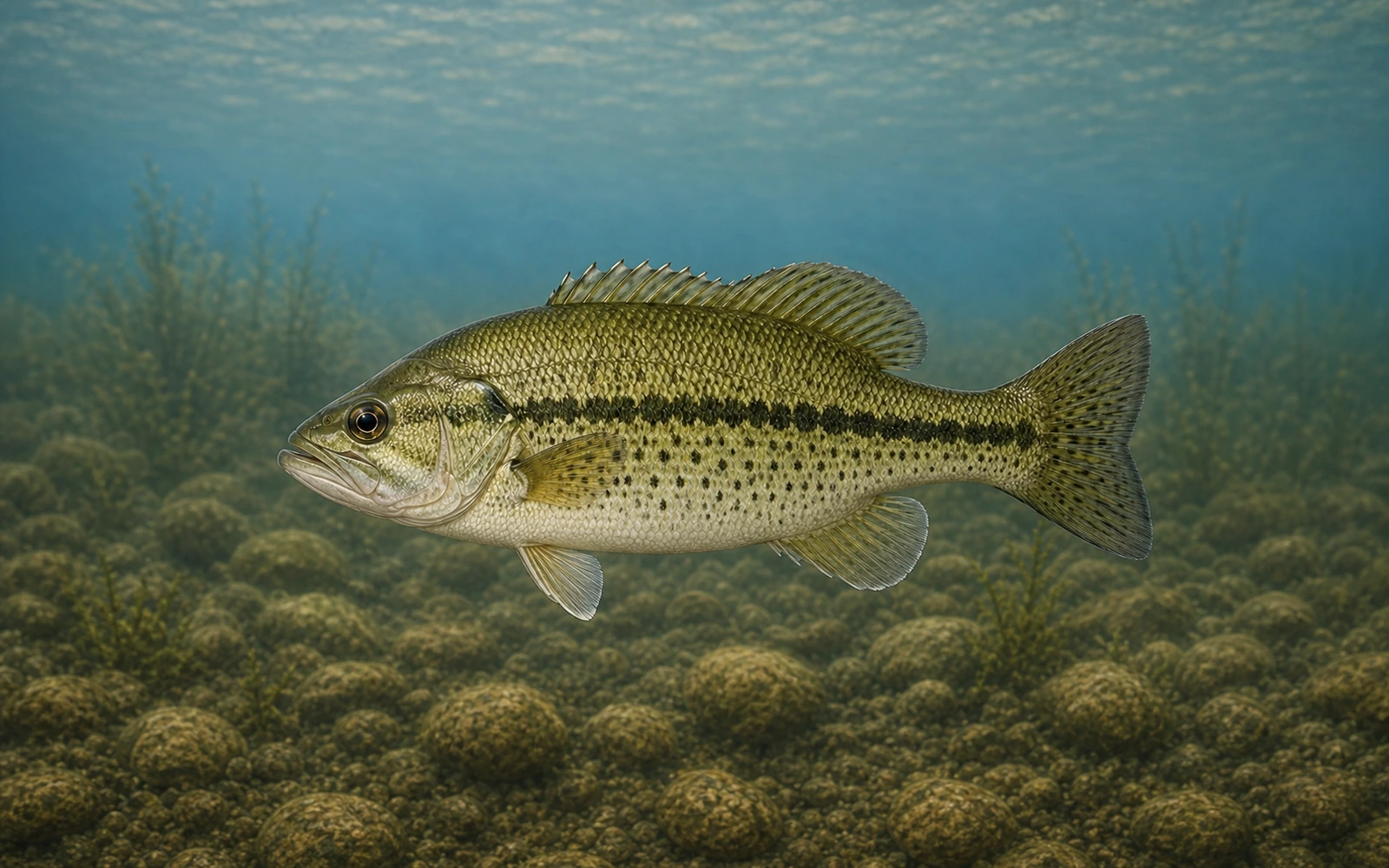
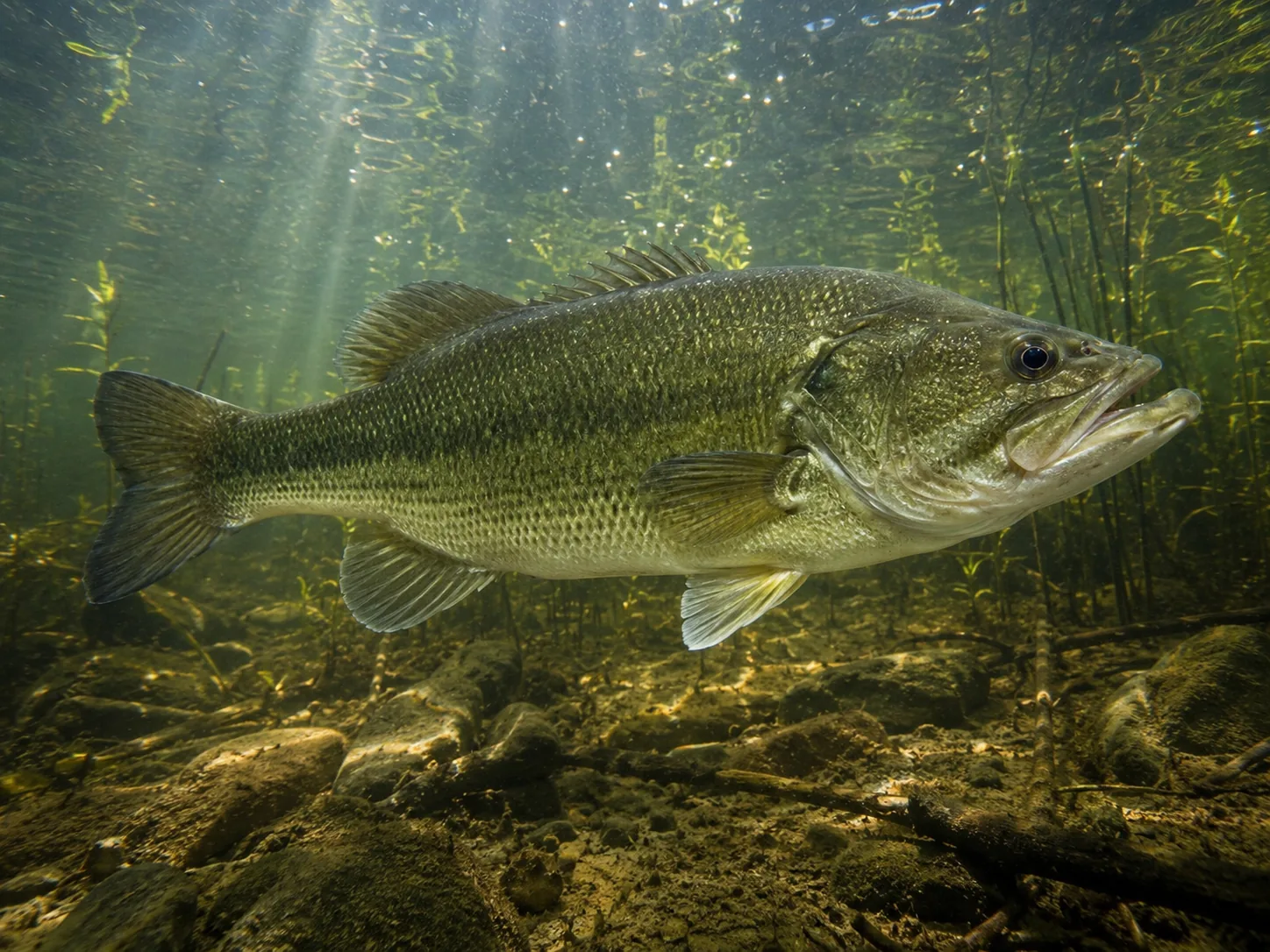
- Look for a broad jaw that extends past the eye, a deep olive body, and a dark broken stripe along the side.
- Where Found
- Common in ponds, coves, lakes, backwaters, and slow river sections with weeds, wood, or docks.
- Typical Size
- Often 12 to 20 inches, with larger fish possible in fertile water.
- Notes
- A favorite club target around cover and shallow feeding windows.
More identification details
Key Identification Features
- Upper jaw usually reaches beyond the rear edge of the eye
- Broad dark stripe or connected blotches along the side
- Deep-bodied black bass with a large mouth
Color and markings: Olive green above, pale below, with a dark lateral band that may fade in large or stressed fish.
Body and mouth: The body is robust and the mouth is notably large; jaw length is most useful when compared with other black bass.
Fins and tail: The spiny and soft portions of the dorsal fin are separated by a deep notch.
Similar Species
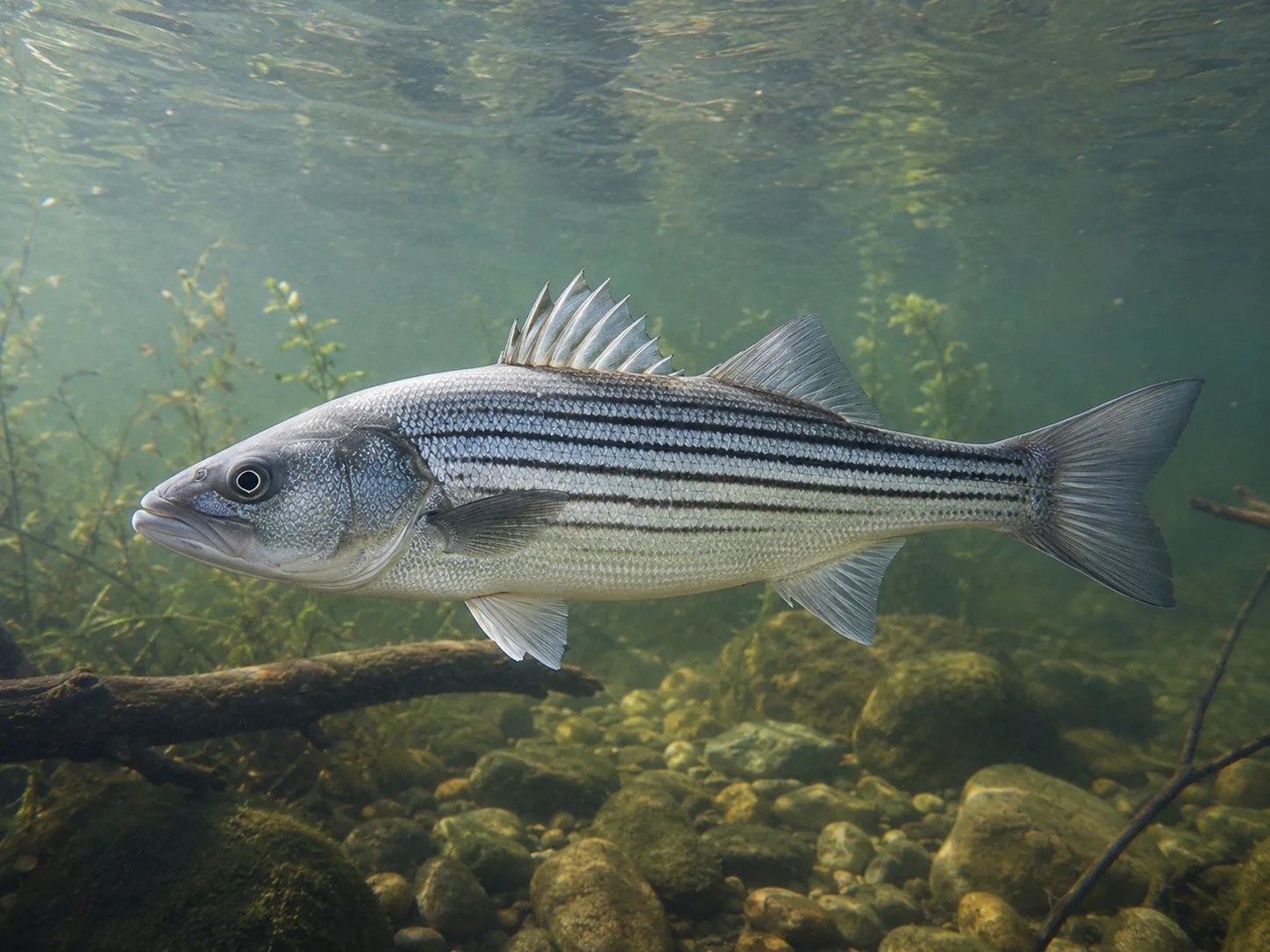
Most often confused with Smallmouth Bass and Spotted Bass.
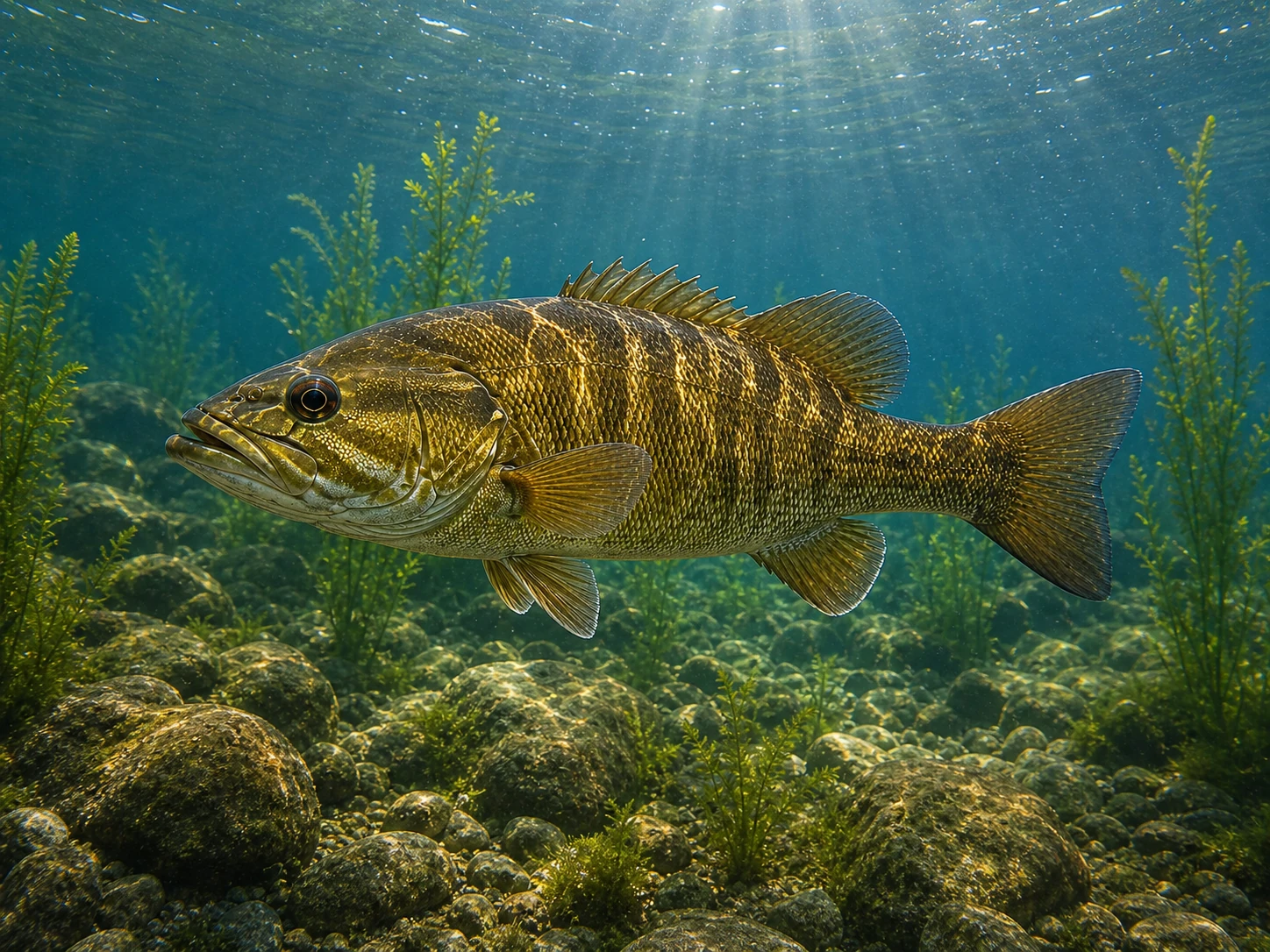
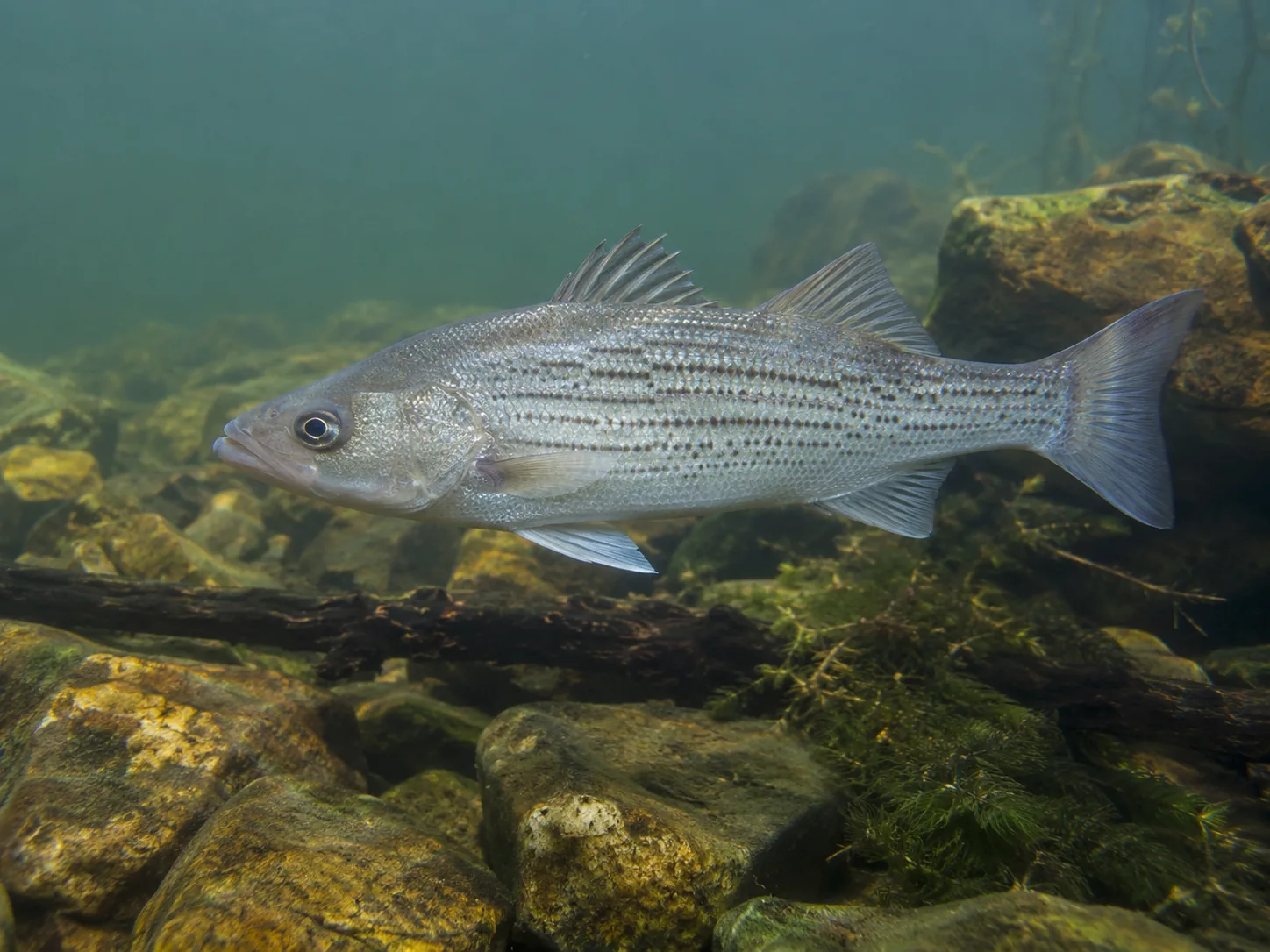
How to tell them apart: Compared with Smallmouth Bass, the jaw usually extends farther behind the eye and the side more often has a horizontal band than vertical bars. Spotted Bass usually has rows of dark spots below its lateral stripe and a smaller jaw.
Appearance Variations
Color and the strength of the side band vary with water clarity, habitat, and fish condition.
Identification caution: Do not use color alone; check jaw length, side pattern, and dorsal-fin notch together.